
20 Tips For Your Students Not To Get Bored In Class
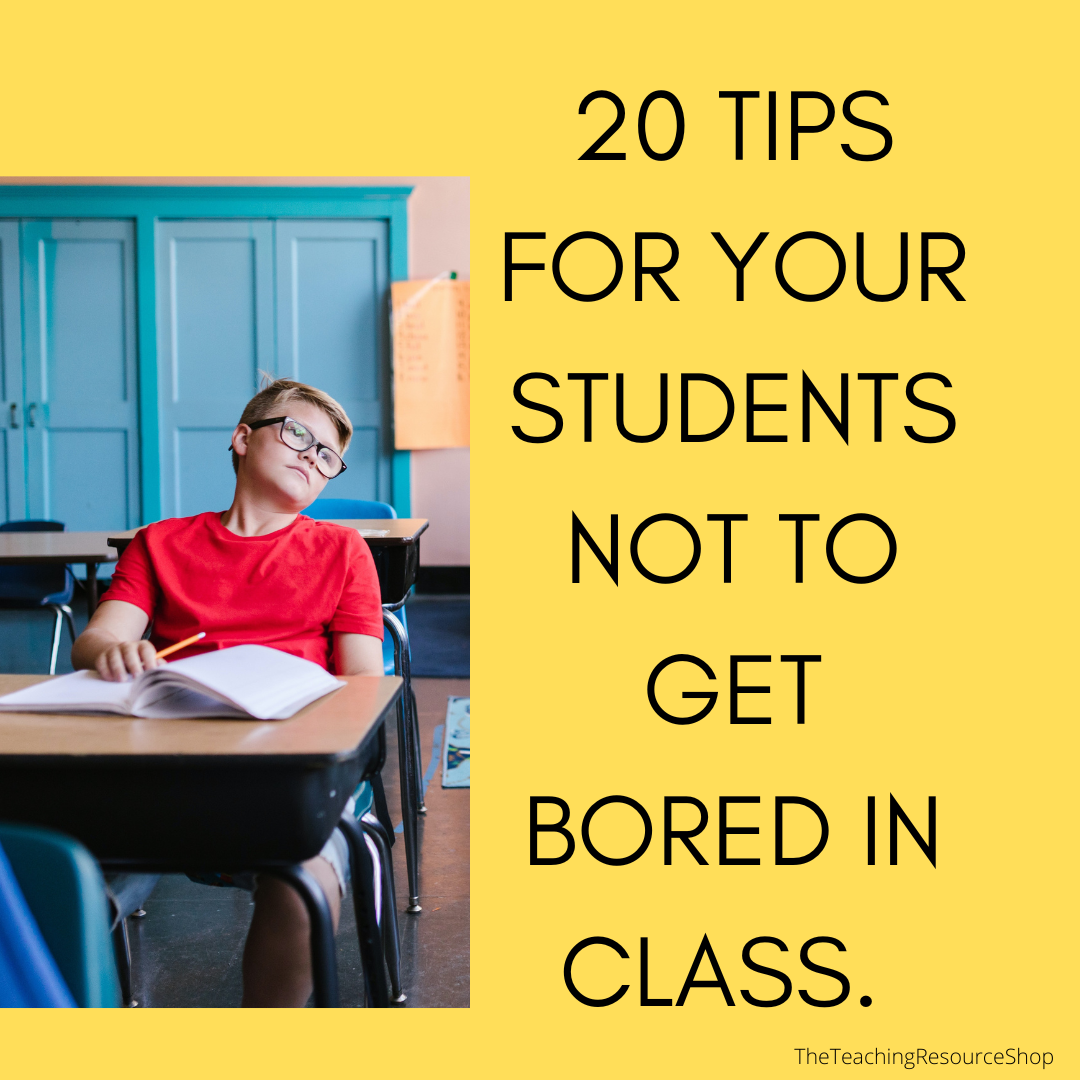
1. Engage: Capture students' interest by making content relevant and interactive. Use dynamic materials and activities to sustain attention.
2. Interactive: Promote active participation through discussions, activities, and hands-on exercises. Encourage students to ask questions and contribute.
3. Varied activities: Incorporate group work, individual tasks, discussions, games, and multimedia presentations to address diverse learning styles and keep the classroom dynamic.
4. Hands-on projects: Offer opportunities for students to apply knowledge in real-life scenarios, fostering creativity, critical thinking, and practical skills.
5. Real-world examples: Use real-world examples to illustrate concepts and show their relevance, making abstract ideas more concrete and engaging.
6. Group work: Foster collaboration and communication by incorporating activities that promote teamwork, problem-solving, and peer learning.
7. Technology integration: Use tools like interactive whiteboards, educational apps, and online resources to enhance learning and engage students in a technology-rich environment.
8. Field trips: Organize educational trips to relevant locations that complement classroom learning and provide hands-on experiences beyond the school setting.
9. Discussion: Encourage active participation and critical thinking through class discussions where students express opinions, ask questions, and engage in meaningful dialogue.cation: Integrate game elements such as points, rewards, and challenges to make learning more engaging, competitive, and enjoyable.
11. Humor: Use appropriate humor to create a positive learning environment, relieve tension, and connect with students personally.
12. Peer teaching: Promote collaborative learning by having students teach each other to enhance understanding, communication, and confidence.
13. Visual aids: Use diagrams, charts, videos, and infographics to enhance understanding, reinforce key concepts, and support visual learners.
14. Storytelling: Use storytelling to make lessons engaging, memorable, and relatable, helping students connect emotionally with the material.
15. Problem-solving tasks: Include activities that challenge students to apply knowledge, critical thinking, and creativity to real problems.
16. Debates: Organize debates on relevant topics to develop critical thinking, research, public speaking, and respectful argumentation.
17. Brain teasers: Use brain teasers and puzzles to stimulate critical thinking, problem-solving, and mental agility while making learning enjoyable.
18. Personalized learning: Tailor instruction to individual students' needs, interests, and learning styles to increase relevance, engagement, and effectiveness.
19. Encourage questions: Foster a supportive environment where students feel comfortable asking questions, seeking clarification, and joining discussions to deepen understanding.
20. Encourage creativity: Provide opportunities for students to express themselves, think creatively, and explore new ideas through open-ended projects and activities.